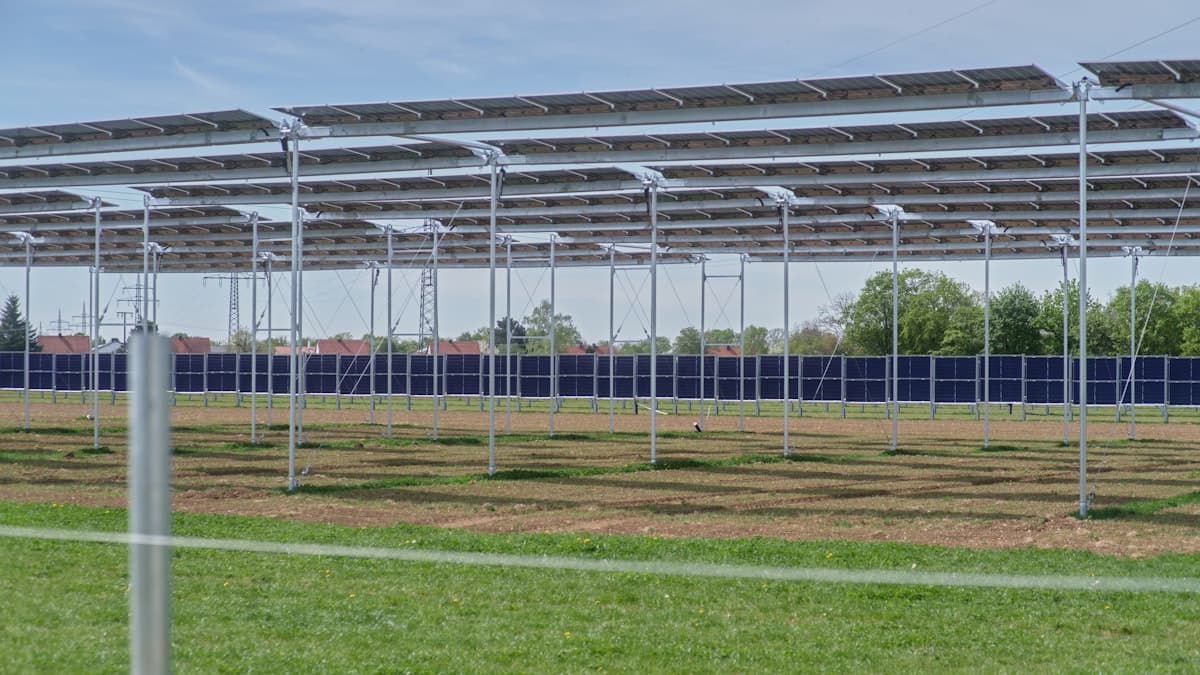
Alberta's Solar Sheep expands livestock management contracts at solar farms, creating new revenue opportunities for Canadian farmers.
Solar farm livestock contracts expand across Alberta
Alberta farmers are finding new ways to generate income by managing livestock at solar installations. Solar Sheep, an Alberta-based company, has grown its operations to include more sheep and additional livestock species for vegetation management at solar panel sites across the province.
This trend represents a practical way for Canadian livestock producers to diversify their revenue streams while solar companies reduce their maintenance costs. The arrangement benefits both parties: farmers get paid to graze animals on land that would otherwise require expensive mechanical mowing, while solar operators maintain their facilities more cost-effectively.
What this means for your operation
If you run sheep, goats, or cattle in Alberta or other provinces with expanding solar development, this could open new contract opportunities. Solar installations need regular vegetation management to prevent shading of panels and maintain clear access roads. Traditional mowing is expensive and requires frequent repeat visits throughout the growing season.
Livestock grazing offers a more sustainable solution that can provide you with additional pasture and steady contract income. The animals do the work naturally while benefiting from shelter provided by the solar panels during hot weather. However, these contracts require specific management practices, including rotational grazing schedules that align with solar facility operations and maintenance windows.
Before pursuing these opportunities, consider your liability insurance coverage and whether your current livestock handling systems can accommodate the unique requirements of solar farm sites. You'll also need to evaluate transportation costs to and from solar installations.
Key numbers
• Solar Sheep has expanded beyond its original sheep-only model to manage multiple livestock species
• Alberta leads Canadian provinces in utility-scale solar development with over 1,000 MW installed
• Solar installations typically require vegetation management 4-6 times per growing season
• Grazing contracts can provide $200-400 per acre annually depending on location and services provided
• Solar panel shade can reduce livestock heat stress by 15-20 degrees Fahrenheit during summer months
What to watch next
As more provinces develop renewable energy policies and solar installations expand eastward, similar opportunities will likely emerge in Saskatchewan, Ontario, and the Maritimes. Watch for requests for proposals from solar developers in your area, typically issued in late winter for the upcoming grazing season. Provincial agricultural organizations are also beginning to develop best practice guidelines for agrivoltaic operations that could standardize contract terms and safety requirements.
FAQ
Q: What insurance do I need for solar farm grazing contracts?
A: You'll need commercial general liability insurance with coverage for operations on third-party property, typically $2-5 million. Contact your farm insurance broker to discuss coverage before signing any solar farm contracts.
Q: Which livestock work best for solar farm vegetation management?
A: Sheep are most common due to their size and selective grazing habits that won't damage equipment. Goats work well for brush control, while cattle can be used on larger installations with appropriate panel height clearance.
Get HarvestWire daily
Canadian ag news before you hit the field.
More in Livestock
View all → Livestock
Wool pellets create new revenue stream for Manitoba sheep
Manitoba sheep farmers can now turn waste wool into profitable pellets for sustainable soil amendment and fertilizer markets in horticulture.
 Livestock
Canada's Top Dairy Farms Prioritize Udder Health in 2025
Lactanet's 2025 Best Managed Herds ranking shows top Canadian dairy farms focus on udder health. Learn what this means for your operation.
 Livestock
High-Energy Diets Boost Canadian Calving Success by 25 kg
Canadian cattle producers can increase weaning weights by 25 kg with proper high-energy diets and maintaining BCS 5-6 during calving season.