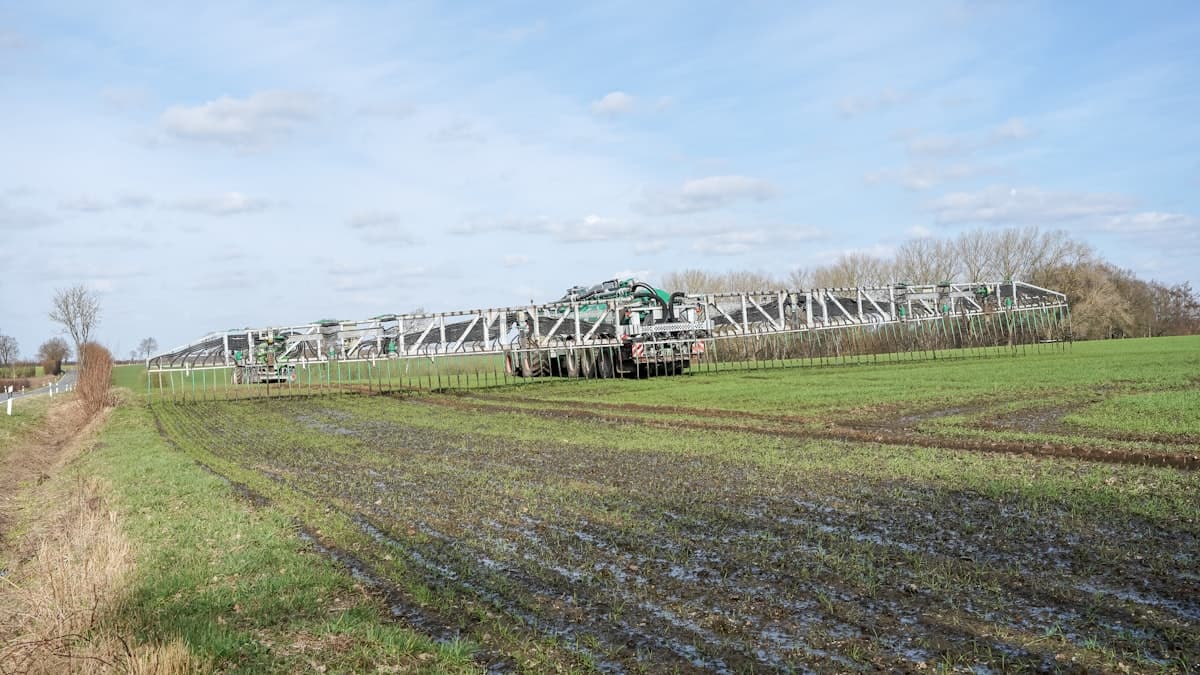
Manitoba farm tests split nitrogen application timing to improve flexibility and reduce risk. What this fertilizer strategy means for your operation.
Split nitrogen application gains ground in Manitoba
A Manitoba farming operation is putting split nitrogen application timing to the test, finding that dividing fertilizer applications helps make their operation more flexible and better able to handle weather risks. The approach involves applying nitrogen fertilizer in multiple smaller applications rather than one large spring application.
The strategy is gaining attention across the Prairies as farmers look for ways to improve nitrogen use efficiency while protecting their investment against unpredictable weather patterns. With fertilizer costs remaining a major expense for grain producers, getting the timing right can make a significant difference to both yields and profitability.
What this means for your operation
Split nitrogen applications let you adjust your fertilizer strategy based on actual growing conditions rather than spring predictions. If early season conditions are poor, you can hold back on later applications and save money. If conditions look good, you can optimize timing for maximum uptake.
The flexibility becomes especially valuable during wet springs when field access is limited or dry conditions when you want to time applications with rainfall. Instead of gambling everything on one application timing, you spread the risk across multiple windows.
For Canadian farmers dealing with increasingly variable weather patterns, this approach offers a way to match nitrogen availability more closely with crop demand throughout the growing season.
Key numbers
• Split applications typically involve 40-60% of total nitrogen at seeding, with remainder applied later
• Side-dress applications usually occur 4-6 weeks after seeding
• Nitrogen use efficiency can improve by 10-15% compared to single applications
• Application costs increase by $8-12 per acre but often offset by yield improvements
• Best results seen when soil moisture is adequate for uptake at application timing
What to watch next
Results from this and other Prairie trials will help establish best practices for split nitrogen timing across different soil types and crops. Watch for updates on optimal application windows and rate splits as the growing season progresses. Extension services across Manitoba and Saskatchewan are expected to release more detailed recommendations based on 2026 trial results by fall.
FAQ
Q: What crops benefit most from split nitrogen applications?
A: Wheat, canola, and corn typically show the best response to split nitrogen applications. These crops have extended nitrogen uptake periods that align well with multiple application timings.
Q: How much does split application cost compared to single application?
A: Split applications typically add $8-12 per acre in extra application costs. However, improved nitrogen use efficiency and yield response often more than offset the additional expense.
Get HarvestWire daily
Canadian ag news before you hit the field.
More in Crops
View all → Crops
CropsPrairie Canola Planning: Target Stands & Flea Beetle Prep
Canadian canola growers can use delayed spring conditions to fine-tune seeding plans, target plant stands, and prepare flea beetle management strategies.
 Crops
CropsRichardson Rejoins Canola Council After 8-Year Break
Richardson International returns to Canola Council of Canada membership after 8 years. What this means for Canadian canola growers and industry.
 Crops
CropsEarly Weed Pressure Cuts Canadian Crop Yields Before Emergence
New research shows weeds affect Canadian crop yields before plants emerge. Learn how early weed control can protect your farm's bottom line.